The dirt at Bennett Park was hard as brick and Ty Cobb ran on it like a man being chased. His spikes glinted. The infielders knew what was coming and it did not matter. He slid, and the crowd rose, and another base belonged to Detroit. This was baseball in the deadball years, when a home run was a rumor and a stolen base was a weapon. Runs came one dusty ninety feet at a time, scratched out by men who understood that speed, nerve, and a sharp pair of spikes could beat a pitcher without ever touching the ball hard.
A Game Built for the Steal
Between 1900 and 1919 the ball was soft, dirty, and often the same one all afternoon. It went brown with tobacco juice and mud and scuffs, and it did not travel. A batter who swung for the fences was a fool. The smart play was to punch a single, then take second, then third, then dance home on a groundout or a bunt. The stolen base was not a highlight. It was the offense itself.
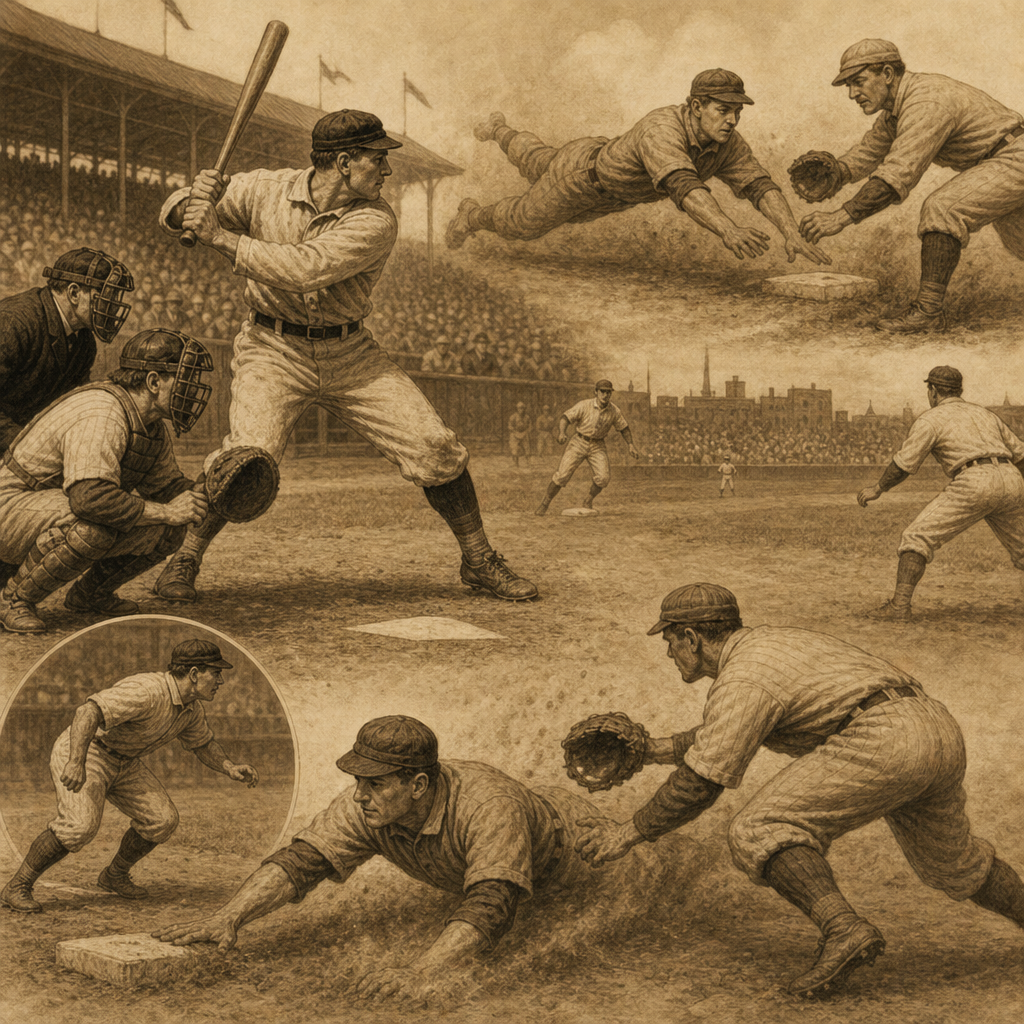
Managers like John McGraw of the Giants and Fielder Jones of the White Sox built whole ballclubs around it. They called it "inside baseball," and it meant the bunt, the hit-and-run, and above all the steal. A team that stole two hundred bases in a season was not unusual. A team that hit forty home runs did not exist. The men who ruled the basepaths were the era's true sluggers, and they did their damage with their legs.
The Georgia Peach and His Fury
No one ran with more menace than Ty Cobb. He came up to Detroit in 1905 a raw, angry boy from Georgia, and he turned that anger into a science. Cobb studied pitchers the way a burglar studies a lock. He knew their moves, their tells, the half-second when their weight shifted toward the plate. Then he was gone.
He stole 96 bases in 1915, a record that stood for nearly half a century. He once stole second, third, and home in the same inning, and he did it more than once in his career. Cobb sharpened his spikes in the dugout where the enemy could see, and infielders who blocked the bag learned to fear his slide. He was not the fastest man in the league. He was the most relentless. He turned baserunning into an act of intimidation, and pitchers walked him just to keep him off the paths where he did his worst work.
Wagner, Collins, and the Honest Thieves
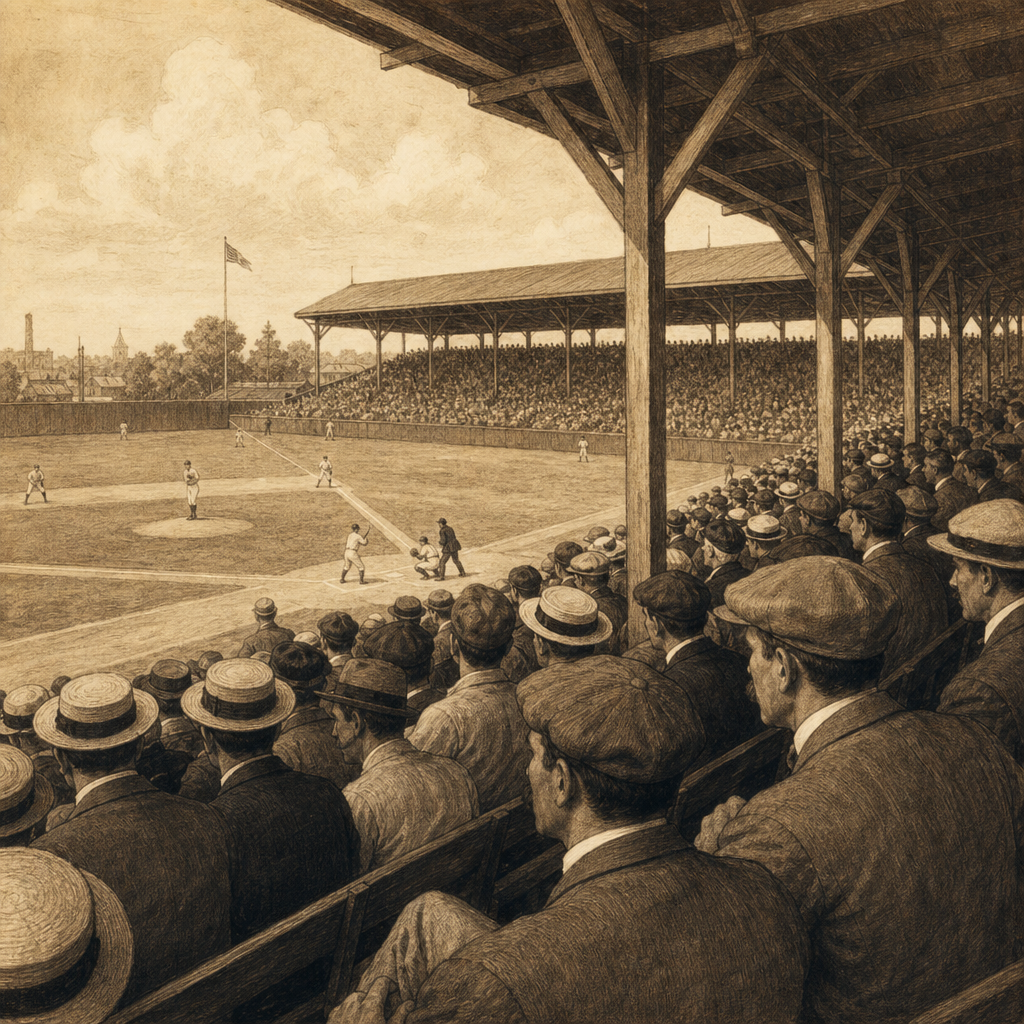
Not every base thief ran on hate. Honus Wagner, the great Pittsburgh shortstop, was a barrel-chested, bowlegged Dutchman who looked like he could barely walk. He was one of the fastest men in baseball. Wagner led the National League in steals five times and swiped 723 in his career, all while playing the game with a gentle grin. He could beat you with his bat, his glove, and his legs, and he did all three for twenty years.
Eddie Collins of the Philadelphia Athletics stole with brains and grace. A Columbia man, quick and precise, Collins piled up 741 stolen bases over a long career and helped Connie Mack's "$100,000 infield" win pennants. He was clean where Cobb was cruel, but no less effective. Collins read a pitcher's motion like a book and took the extra base as calmly as a man crossing the street.
Then there was Max Carey of the Pirates, a switch-hitting outfielder who might have been the finest pure basestealer of them all. Carey led the National League in steals ten times. He was not content merely to be fast. He kept notebooks, charted pitchers, calculated the odds, and in 1922, just past the era's edge, he stole 51 bases and was caught only twice. That was the deadball mind at work: patient, studious, and quick as a whip.
The Art and the Danger
Stealing a base in those years was rough business. The bases were sometimes staked hard into the ground, and a bad slide could break an ankle. Catchers wore thin gloves and hurled the ball down to a shortstop or second baseman who stood his ground and took the runner's spikes in the shins. There was blood in it. Sherry Magee, Bob Bescher, Clyde Milan, Frank Chance of the Cubs, and Sam Crawford all ran hard and paid for it in scars.
Bob Bescher of the Reds stole 81 bases in 1911, a National League record for the era. Clyde Milan of Washington ran neck and neck with Cobb for a while and stole 88 in 1912. These were not household names to later generations, but in their day they were feared. A single from one of them was as good as a double, because everyone in the park knew he was going, and knowing did not help.
The steal was psychology as much as speed. A runner who took a long lead forced the pitcher to think about him instead of the batter. He rattled the catcher. He pulled the infield out of position. A good baserunner won games he never got a hit in. That was the beauty of the deadball style, and when Babe Ruth started launching the lively ball into the seats after 1920, it all began to fade. The thieves gave way to the sluggers, and the game was never quite so cunning again.
The Legacy in the Dust
They are gone now, those hard men who ran on brick-hard dirt with sharpened steel on their feet. But their records still stand as monuments to a stranger, tighter, more desperate kind of baseball, when a stolen base could decide a pennant and a fast man was the most dangerous thing on the field. Cobb, Wagner, Collins, Carey, Milan, Bescher. Kings of the steal, every one.
Now it is your turn to build a ballclub in that dead ball world. Take the general manager's chair, sign your speedsters and your spitballers, and see if you can steal your way to a pennant. Step into the deadball era and play for free.
Live it, don't just read it.
Take the GM's chair in 1910. Scout the sandlots and build a winner one stolen base at a time — free.
Open your front office